Why Connective Tissue Maintenance Matters | LY Library
by LYL Admin, 01 May, 2026
LY Library | Mobility, Muscle and Joint Health | Connective Tissue Health
The Body Parts You Never Think About—Until They Start Complaining
Why connective tissue maintenance matters before pain appears
Estimated Reading Time: 4 Minutes
Most of us rarely think about connective tissues.
We notice our muscles after a workout. We notice our bones when we learn about fractures. We notice our heart and lungs when we exercise.
But connective tissues quietly support every movement we make, every day.
They help hold the body together, connect muscles to bones, cushion joints, support posture, and allow movement to stay smooth and coordinated.
Without healthy connective tissues, even simple activities such as climbing stairs, carrying groceries, gardening, typing on a keyboard, enjoying a walk, or playing with children can gradually become less comfortable over time.
What Are Connective Tissues?
Think of connective tissues as the body's internal support network.
They include:
-
Cartilage that cushions joints
-
Tendons that connect muscles to bones
-
Ligaments that connect bones to bones
-
Fascia that surrounds and supports muscles and organs
-
Blood vessels that help deliver nutrients throughout the body
Together, these structures form an invisible framework that helps the body move efficiently.
A useful comparison is a building.
When we look at a building, we notice the walls, windows, and roof. What we don't see are the beams, supports, and internal structures that keep everything stable.
Connective tissues play a similar role in the body. They help hold everything together while allowing us to move, bend, stretch, lift, and stay active.
Did You Know?
Fascia, one of the body's connective tissues, forms a continuous network that surrounds muscles, organs, nerves, and blood vessels throughout the body. Some experts describe it as the body's "internal web."
Why Maintenance Matters Before Pain Appears
Many people assume they only need to care for their joints and connective tissues when discomfort begins.
In reality, the body experiences small amounts of wear and stress every day.
This is completely normal.
Walking, exercising, lifting objects, sitting for long hours, repetitive movements, and simply getting older all place demands on connective tissues.
The body constantly repairs and renews itself, but over time these tissues may become less resilient than they once were.
That is why maintenance is often easier than recovery.
Just as we service a car before it breaks down, maintaining connective tissues early may help support long-term mobility and everyday comfort.
The goal is not to avoid activity.
The goal is to keep enjoying activity for as long as possible.
Did You Know?
Many age-related changes in flexibility, movement efficiency, and recovery occur gradually over years rather than suddenly. Because these changes happen slowly, people often notice them only after they have already begun affecting daily life.
Mobility Is Freedom
When we think about health, we often think about blood pressure, cholesterol, or body weight.
Yet one of the most important aspects of healthy aging is something much simpler:
The ability to move comfortably.
Being able to travel, exercise, play with grandchildren, enjoy hobbies, carry groceries, climb stairs, or simply go about daily life independently all depend on healthy movement.
Mobility affects not only physical health but also confidence, independence, and quality of life.
Many people begin paying attention to mobility only after discomfort appears.
However, maintaining mobility is often easier than trying to regain it later.
Just as we maintain our homes, vehicles, and important possessions, our bodies also benefit from regular care and support.
Who Can Benefit From Connective Tissue Maintenance?
Connective tissue support is not only for athletes or older adults.
Many people place regular demands on their bodies without realizing it.
Active Individuals
Running, cycling, gym workouts, sports, and recreational activities all place repeated stress on joints and connective tissues.
Office Workers
Long hours at a desk can affect posture and place strain on the neck, shoulders, back, wrists, and hips.
People With Repetitive Movements
Typing, lifting, standing, driving, caregiving, and manual work may place repeated demands on specific areas of the body.
Adults Focused on Healthy Aging
As we age, maintaining flexibility, mobility, and comfortable movement becomes increasingly important for staying active and independent.
Anyone Who Wants to Keep Moving Well
You do not need to be in pain to care about connective tissue health.
Many people simply want to stay active, mobile, and comfortable as they continue doing the things they enjoy.
How Glucosamine and MSM Help
Two ingredients commonly used to support connective tissue health are glucosamine and MSM.
Glucosamine
Glucosamine is a naturally occurring compound found in cartilage and connective tissues.
It is commonly used to support cartilage health, joint function, and smooth movement.
MSM (Methylsulfonylmethane)
MSM is a naturally occurring sulfur compound that helps support connective tissue structure and flexibility.
It is often associated with supporting collagen-related tissues and recovery from everyday physical demands.
Together, glucosamine and MSM are widely used as part of connective tissue maintenance strategies aimed at supporting comfortable movement and an active lifestyle.
Did You Know?
Connective tissues are found throughout the body—not only in the knees. The neck, shoulders, back, elbows, wrists, hips, ankles, feet, and many other areas all rely on healthy connective tissues for smooth movement and support.
Supporting Your Connective Tissue Maintenance Journey
Maintaining healthy movement involves multiple lifestyle factors working together.
These may include:
-
Regular physical activity
-
Good posture and ergonomics
-
Adequate rest and recovery
-
Balanced nutrition
-
Healthy body weight management
-
Appropriate connective tissue support
LY Vital-G Body Maintenance Cream is formulated with glucosamine and MSM and is designed for targeted topical application to areas involved in everyday movement.
Whether you are active, working long hours, managing repetitive activities, or simply focused on maintaining mobility as you age, supporting connective tissues can be part of a proactive approach to staying active and moving comfortably.
Think Beyond Pain
The goal of connective tissue maintenance is not simply to respond when discomfort appears.
The goal is to support the body's ability to keep moving comfortably through work, exercise, hobbies, travel, and everyday life.
Healthy movement is something many of us take for granted—until it becomes more difficult.
By caring for connective tissues today, we invest in our ability to stay active, independent, and engaged in the activities we enjoy tomorrow.
Learn More
This article is intended for general educational purposes.
For readers interested in exploring connective tissue health and mobility further, useful educational resources include:
-
National Institute of Arthritis and Musculoskeletal and Skin Diseases (NIAMS)
-
Harvard Health Publishing
-
Cleveland Clinic
-
MedlinePlus
-
Mayo Clinic
These organizations provide evidence-based information on connective tissues, joint health, mobility, and healthy aging.
Other Articles

Perfect No-Makeup Makeup Look with LY An...
Discover LY Anti-Aging CC Primer Cream – the effortless beauty essential that hydrates, protec...

How to Choose the Right Toner for Your S...
Many toners are marketed as refreshing or hydrating, but not all are created equal. Some may quietly...

How LY Vital-G Body Maintenance Cream Su...
The LY Vital-G Body Maintenance Cream, formulated with Glucosamine and MSM, is designed to promote j...
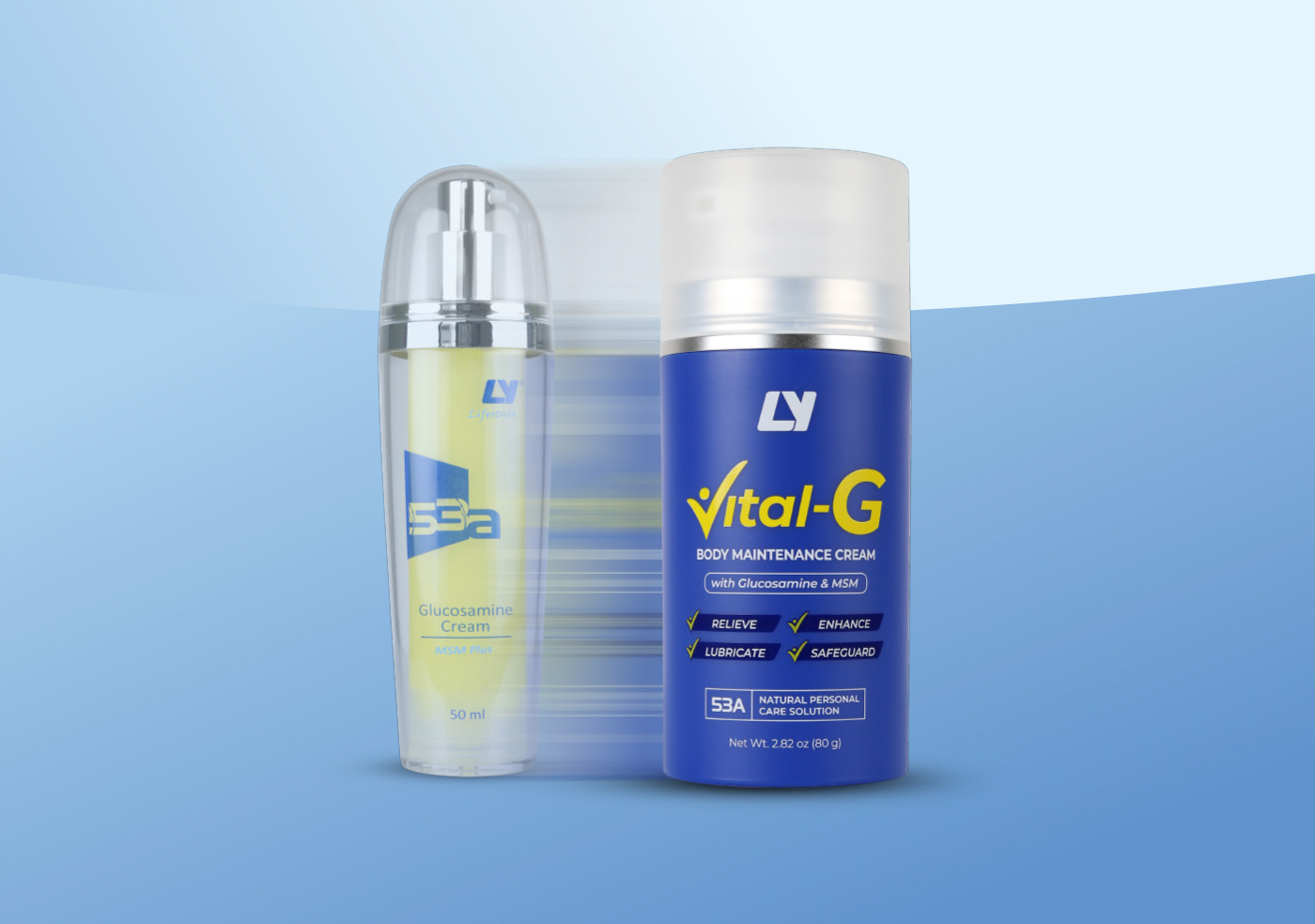
LY 53A Vital-G Body Maintenance Cream (w...
Unlock the secret to long-term vitality and holistic body wellness. Combining natural ingredients wi...